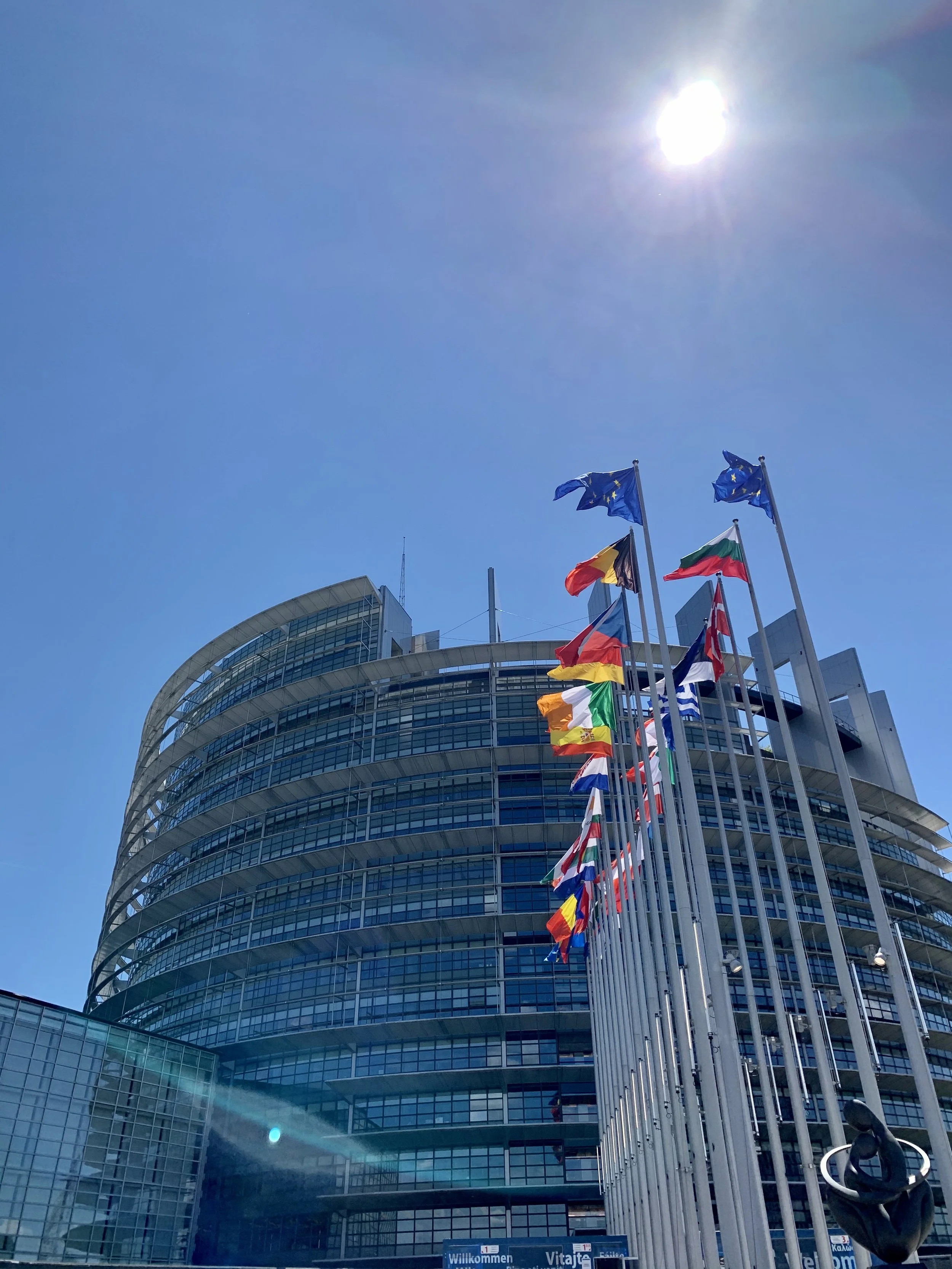
European Union Law
The European Union has long been an integral part of our daily lives. Through the European Single Market, Economic and Monetary Union and the common fundamental freedoms, it has created a unique political, economic and legal order. For me, European integration also represents a particular potential for peace, cooperation and stability in Europe.
EU law constitutes an autonomous legal order, developed, interpreted and enforced by its own institutions and the Court of Justice of the European Union. At the same time, it is closely interconnected with national law: European rules are applied and implemented by national authorities and courts and can directly create rights and obligations for individuals and businesses.
European law is therefore no longer merely a matter for institutions or internationally active companies. Free movement, the free movement of workers, freedom of establishment, freedom to provide services and the free movement of goods create concrete opportunities that individuals and businesses can make use of in their personal and professional lives.
European Union Law as a Focus of My Practice
European Union law has been a part of my academic and professional work for many years. In my doctoral research at the University of Hamburg, I examined the Spitzenkandidat concept from the perspective of EU law. I subsequently completed an LL.M. in European Union Law at the University of Amsterdam. During my legal traineeship, I also worked at the European Commission’s Directorate-General for European Civil Protection and Humanitarian Aid Operations (ECHO), where I focused, among other things, on the unintended consequences of sanctions.
This academic and practical engagement continues to shape my approach to questions of EU law. I advise and represent clients on the application and implementation of EU law and on questions concerning the relationship between European and national law – and identify the rights and opportunities that arise from it.